
"Vietnam coffee growth"
500 article(s) found
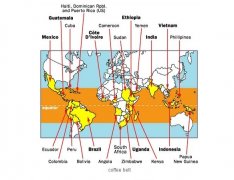
Where do good coffee beans come from? common sense of fine coffee.
Coffee trees need high altitude, tropical climate and fertile soil to grow the best coffee beans. Such climatic conditions on earth surround the equator, about 25 degrees north latitude to 30 degrees south latitude. In addition to location, there are many other factors that affect the quality of coffee: planting methods, soil fertility, weather, especially rainfall and light, and exact latitude.
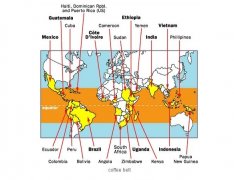
Where do coffee beans come from? The production zone of boutique coffee beans
Coffee trees need high altitude, tropical climate and fertile soil to grow the best coffee beans. Such climatic conditions on earth surround the equator, about 25 degrees north latitude to 30 degrees south latitude. In addition to location, there are many other factors that affect the quality of coffee: planting methods, soil fertility, weather, especially rainfall and light, and exact latitude.

Introduction to roasting record processing method for description of coffee flavor in Erida Manor, Panama at high altitude
Panama's success in growing coffee has not always been as brilliant as it is now, and it has taken a lot of time from the introduction of coffee to finding a suitable development path for the country. For quite a long time, Panamanians did a lot of experiments to cross coffee varieties in order to get higher yields. And in recent decades, great changes have taken place in the coffee industry in Panama.
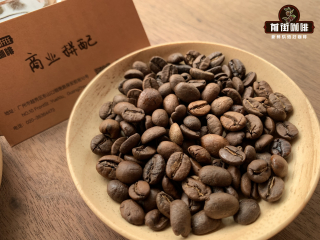
The difference between Arabica and Robusta the harm of robusta beans
Robusta generally grows in the Eastern Hemisphere, mainly in Africa, Indonesia and Vietnam. Arabica is also grown in Africa and Papua New Guinea, but today it is mainly grown in Latin America. Among the major coffee producing countries in the world, Colombia only grows Arabica coffee. Most of the coffee grown in Vietnam is Luo.

Coffee classroom: the difference between Arabica and Robusta coffee beans
The world's coffee beans are mainly divided into two categories: small seed coffee bean Arabica Arabica and medium grain coffee bean Robusta Robsta. Small seed coffee beans grow in the temperate and tropical climate of Haiba 600-2000 meters, with rich and delicate taste, strong smell, high acidity and smooth texture, bringing strong aroma and smoothness to the coffee.

What's the difference between Arabica and Robusta?
The world's coffee beans are mainly divided into two categories: small seed coffee bean Arabica (Arabica) and medium seed coffee bean Robusta (Robusta). Small seed coffee beans grow in the temperate zone and climate of Haiba, with a rich and delicate taste, strong smell, high acidity and smooth texture, bringing strong aroma and smoothness to the coffee. Medium seed coffee bean is just like its English name Ro.

Colombia coffee beans alcohol flavor taste and grade introduction
Pay attention to the coffee comment (Weixin Official Accounts vdailycom ) and find that the beautiful cafe opens its own shop. Colombia coffee beans Bucaramanga Supremo Colombia is the world's third largest coffee producer after Brazil and Vietnam. Bucaramanga is a heavily wooded region in Colombia's eastern mountains, where rainfall, clouds and soil are ideal for planting

Coffee consumption in China is growing at an annual rate of 25%-while the average growth rate of coffee consumption in the world is
Although China's coffee consumption is facing an awkward situation, the sustained and rapid growth of consumption also makes people in the industry optimistic about the development prospects of China's coffee industry. At present, China is one of the countries with the fastest growth in coffee consumption in the world. At present, the consumption of coffee in China is about 200 billion yuan. Consumption is growing at an annual rate of 25%, while the world's coffee consumption is growing at an average rate of 2%.
Brief introduction of coffee producing countries: Guatemala
Guatemala, whose name comes from the Mayan language, means the land of many trees, the country of the forest. Located in Central America, it is known as the pearl in the crown of China and the United States. Although Guatemala has a limited land area, it has a rich and diverse climate. A country famous for its lakes and volcanoes, with volcanic soil, precipitation, temperature, humidity and altitude, Guatemala has a natural environment suitable for coffee growth.

What is the Brazilian Fine Coffee Association? what are the boutique coffee beans in Minas, Brazil?
Professional coffee knowledge exchange more coffee bean information please follow the coffee workshop (Wechat official account cafe_style) Brazil is the world's most important producer of raw coffee beans, accounting for about 1 of the world's total output, although its output has been surpassed by Vietnam in recent years, but its important position in the global coffee market is still difficult to shake, because all its exports are Arabica.
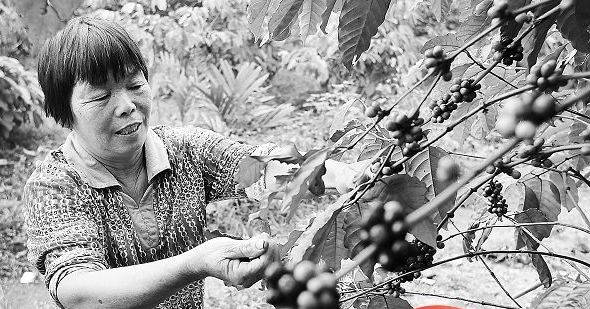
Coffee cold knowledge: Hainan coffee annual output of less than 200 tons, sales reached 6000 tons
Growers at Xinglong Overseas Chinese Farm are checking coffee growth. Reporter Su Xiaojie Photographed by our reporter Kuang Changxun Guo Jiaxuan Special reporter Chen Xunjing Correspondent Wang Zhezhi Fu Ji like a mountain, prosperous prosperity. In the past May Day holiday, Wanning Xing

Comparison table between Arabica and Robusta
Follow the caffeine review (Wechat official account vdailycom) found that the beautiful cafe opened a small shop of its own. Arabica (Arabica) Arabica is also known as Gaoshan beans, its main features: ● fragrant smell is strong; ● is not easy to have a bitter taste; ● coffee oil content is moderate; ● acidity is high; ● caffeine content is 30% of Robusta 40%. Coffee beans all over the world

Coffee classroom: the difference between Arabica and Robusta coffee beans
The world's coffee beans are mainly divided into two categories: small seed coffee bean Arabica (Arabica) and medium seed coffee bean Robusta (Robusta). Small seed coffee beans grow in the temperate zone and climate of Haiba, with a rich and delicate taste, strong smell, high acidity and smooth texture, bringing strong aroma and smoothness to the coffee. Medium seed coffee bean is just like its English name Ro.

The rapid growth rate of coffee is maintained by 2500000 coffee farmers around the world.
Since the 1960s, the total output of coffee in the world has increased by three times every year, and the demand has increased by 5% a year. Such a rapid growth rate is sustained by 2500000 coffee farmers around the world, and 80 to 90 percent of them are small coffee farmers, and their coffee belt is also the most significant climate change region in the world.
The Life of two kinds of Coffee beans of Arabica Arabica and Robusta Robusta
Coffee beans in the world are mainly divided into two categories: small seed coffee bean Arabica (Arabica) and medium seed coffee bean Robusta (Robusta). Small seed coffee beans grow in a temperate climate of 600-2000 meters in Haiba, with rich and delicate taste, strong smell, high acidity and smooth texture, bringing strong aroma and smoothness to the coffee. Medium seed coffee bean is just like its English name Robusta.
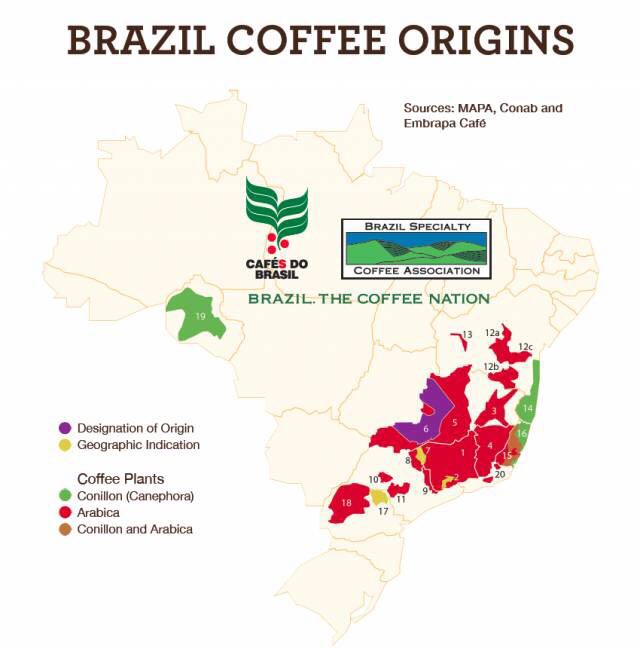
According to the Brazilian production area, the raw coffee beans in the South Minas Hilado region are all Arabica species.
For the exchange of professional baristas, please pay attention to the coffee workshop (Wechat official account cafe_style) Brazil is the world's most important producer of raw coffee beans, accounting for about 1x3 of the world's total output, although its output has been surpassed by Vietnam in recent years, its important position in the global coffee market is still difficult to shake, because all its exported raw coffee beans are Arabica (a small number of Luo in Brazil.

Introduction to the Grinding Calibration method of Brand Flavor description of single Coffee Bean Price in Brazil
Introduction to Yemeni: Mocha Sanani, Mattari India: Malabar, Karnataka, Tellichery Vietnam: Weasel Coffee coffee Indonesia: Java, Mandh

A Brief Introduction to the Flavor Description of Coffee Beans Made in Yunnan Province
Introduction to Yunnan Coffee Production Ding Ruirong, Director of Wanning City Bureau of Industry and Science and Technology Information Industry, told reporters that in 2009, the local government started coffee planting subsidies in order to support the coffee industry. In that year, farmers were supported to expand nearly 300 mu of coffee. This batch of coffee only began to bear fruit last winter and this spring. In 2009, the government also subsidized the existing coffee fields at that time, subsidizing 365 mu.

What are the characteristics of Arabica coffee beans? how to distinguish Arabica coffee beans?
Professional coffee knowledge exchange more coffee bean information Please pay attention to the coffee workshop (Wechat official account cafe_style) often see breakfast shops or coffee shops, publicity stressed that their own coffee is 100% Arabica coffee, but isn't that the right thing to do? Coffee beans are generally divided into Arabica and Robusta. 70% of the world's coffee beans are.

Geographical location of Nalingong coffee producing area in Colombia? What kind of treatment does Nalinglong coffee use?
Professional coffee knowledge exchange More coffee bean information Please pay attention to coffee workshop (Weixin Official Accounts cafe_style) Colombia Na Linglong coffee production area geographical location? What kind of treatment does Nalinglong coffee use? Colombia is currently the third largest coffee producer in the world, after Brazil and Vietnam. Commercial beans were first cultivated in the 1830s, and coffee accounted for export farmers in the 20th century.